

Saudi Arabia’s long-awaited plan to establish a civilian nuclear programme has entered a new phase of uncertainty after US President Donald Trump announced that the agreement will only move forward if the kingdom normalises diplomatic relations with Israel.
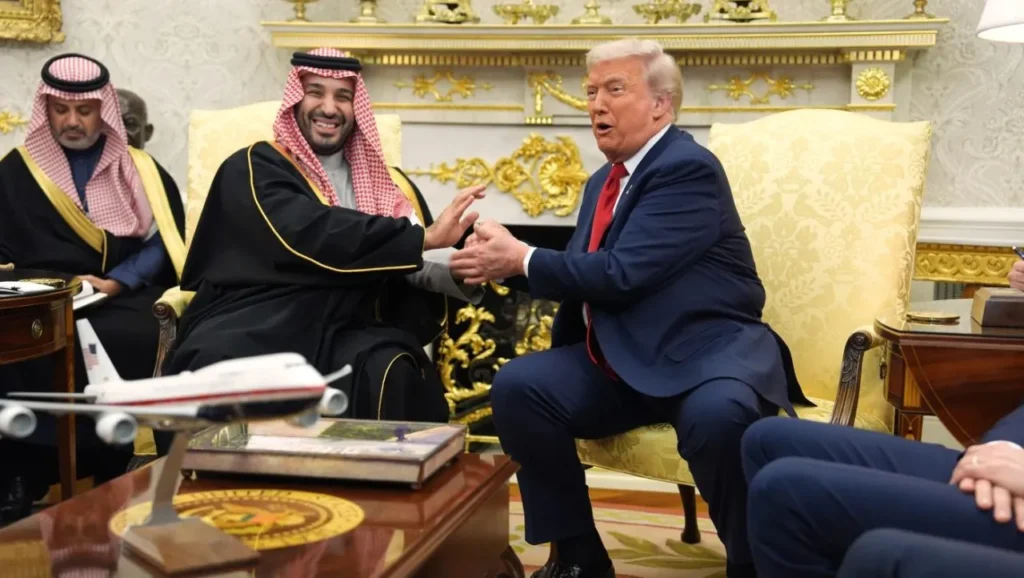
The announcement came just hours after Washington and Riyadh signed what had initially been viewed as a major breakthrough for Saudi Arabia’s energy ambitions. However, Trump later stated that the agreement would not take effect unless Saudi Arabia joined the Abraham Accords.
The US president made the announcement on his Truth Social platform, saying the nuclear agreement will be approved, but is totally subject to Saudi Arabia joining the very respected and successful Abraham Accords.
The new condition is expected to complicate the deal, as Saudi Arabia has consistently maintained that it will not establish formal ties with Israel until there is a credible pathway towards the creation of a Palestinian state.
Analysts believe the latest development could undermine years of diplomatic efforts between the two allies.
“If DC tries to force normalisation on Riyadh, it’s not likely to work out very well,” said H.A. Hellyer, an analyst at the Royal United Services Institute in London.
“Israel has the most toxic brand it has ever had. Would Saudi decide to do a complete 180 on what it has declared for the past three years, or thirty years? Quite dubious,”added.
The agreement had been seen as an important step in Saudi Arabia’s efforts to diversify its energy sector by introducing civilian nuclear technology to meet growing electricity demand while reducing dependence on oil for domestic consumption.
If approved by the US Congress, it would also strengthen economic cooperation between Washington and Riyadh while opening new opportunities for American energy companies.
Hesham Alghannam, a Saudi security analyst and researcher, argued that the agreement would also help keep Saudi Arabia’s nuclear programme within a US framework instead of relying on rival global powers.
“The alternative was not a Saudi Arabia without nuclear ambitions, it was a Saudi nuclear programme anchored in Russian or Chinese supply chains, with no American visibility, no commercial foothold for Westinghouse and no structural leverage,” he said.
Although the full details of the agreement have not yet been released, US Secretary of State Marco Rubio said safeguards aimed at preventing nuclear weapons proliferation would be included before lawmakers consider approving the deal.
“We will ensure that in order to get congressional approval, we’re going to need to have those safeguards in place,” Rubio said on the sidelines of a summit in Manila.
The latest development is expected to trigger debate in Washington and across the Middle East, with critics raising concerns about regional stability and nuclear security.
At the same time, Trump’s insistence on linking the agreement to Saudi-Israeli normalisation signals that the United States remains committed to using diplomatic recognition of Israel as a key condition in its broader Middle East policy.
As discussions continue, the future of the agreement will likely depend as much on regional politics as on energy cooperation.
