

The Tanzanian government has pushed back against remarks made by William Ruto regarding Kenya’s road network in comparison to other East African countries, describing his claims as inaccurate and misleading.
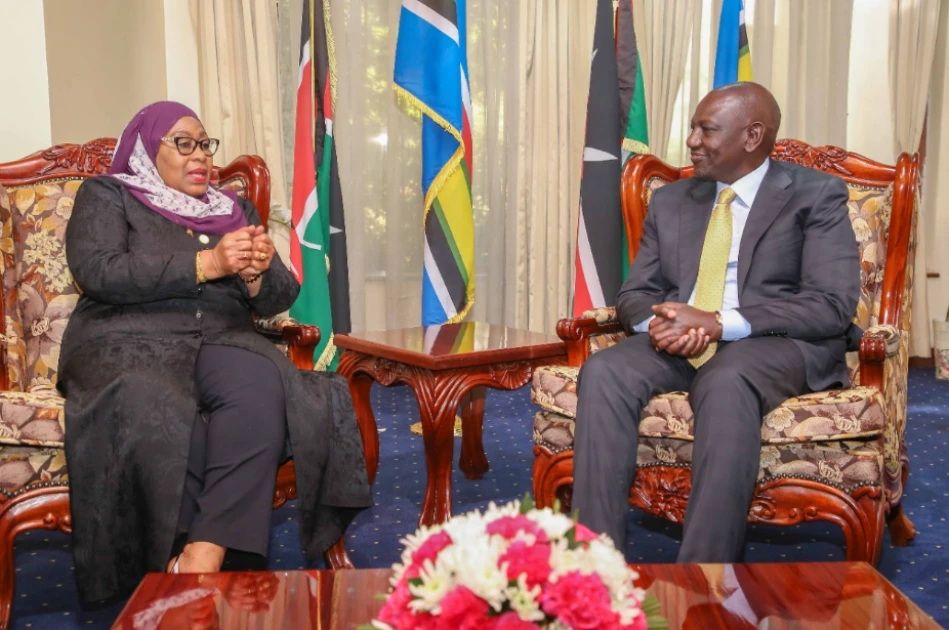
Speaking during a church service on April 19, President Ruto defended Kenya’s relatively high fuel prices, attributing them to the cost of maintaining what he described as an extensive road network.
He argued that Kenya’s economic status as a middle-income country places a heavier burden on infrastructure development compared to its regional neighbours.
“Kenya is a middle-income country. Our neighbours are the least developed countries. If you want to compare Kenya with others, compare Kenya with other middle-income countries,” said Ruto.
He further claimed that Kenya has approximately 20,000 kilometres of tarmacked roads more than the combined total of several neighbouring countries, including Uganda, Rwanda, Burundi, South Sudan, and the Democratic Republic of the Congo.
“If you add the number of kilometres in Uganda, Tanzania, DRC, Rwanda, Burundi and South Sudan, it is not 20,000 km, so the 20,000 kilometres we have in Kenya is more than all the tarmac in all the other 7 countries in East Africa,” he added.
However, the remarks have drawn a swift response from officials in Tanzania under President Samia Suluhu Hassan.
According to one of Tanzania’s Minister , the country alone has about 16,000 kilometers of tarmacked roads, narrowing the gap with Kenya’s reported figures.
When combined with road networks from other East African nations, the total surpasses 22,000 kilometres contradicting Ruto’s claims.
“It must be known that Tanzania is a middle-low income country, and in East Africa, we are only two countries, Tanzania and Kenya. Tanzania has a total of 16,000 kilometres of tarmac roads in both urban and rural areas,” said the Minister.
“So those figures belittling us as other East African countries, those figures mentioned are untrue,” he added.
The exchange highlights growing sensitivities around regional comparisons on economic development and infrastructure, particularly as East African countries continue to invest heavily in transport networks to support trade and growth.
