

Signs of a gradual return to normal shipping activity emerged on Thursday as several oil tankers successfully navigated the Strait of Hormuz following an agreement aimed at ending months of hostilities between the United States and Iran.
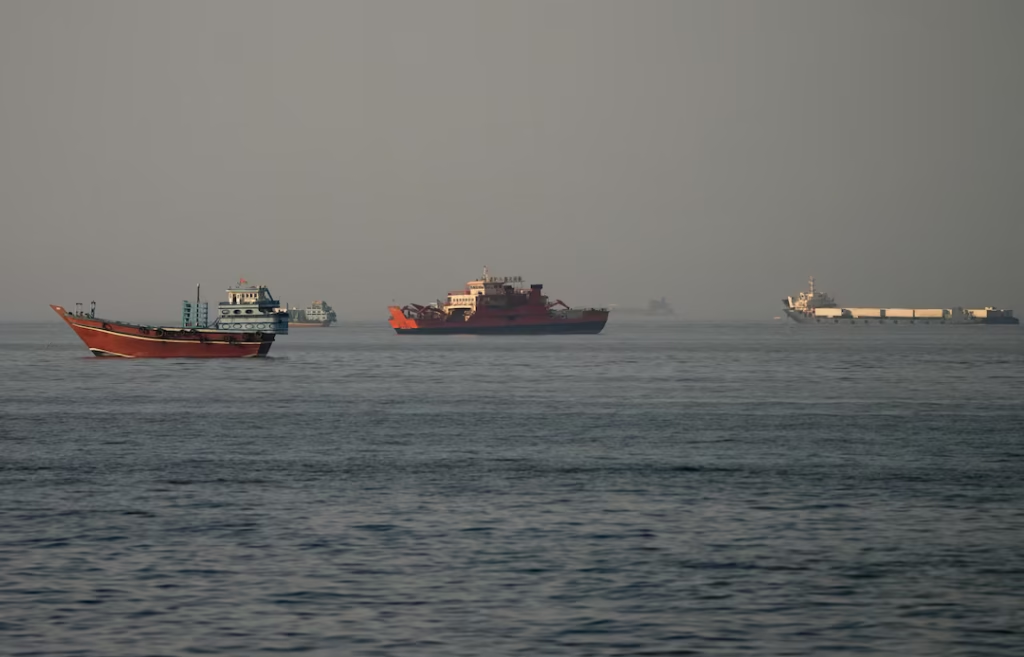
Maritime monitoring services reported that three Saudi supertankers carrying crude oil passed through the strategic waterway, raising hopes that trade movements in one of the world’s most important energy corridors may begin recovering after being severely disrupted by the conflict.
Data from the maritime analytics firm Kpler showed that by mid-afternoon, eight commodity vessels had crossed the strait, a figure largely consistent with traffic levels recorded in recent days.
Among the ships were three Very Large Crude Carriers (VLCCs), each transporting approximately two million barrels of Saudi oil.
Although the crossings suggest renewed activity, vessel movements remain significantly lower than levels seen before the conflict. Industry figures indicate that daily traffic through the strait has yet to approach the volumes regularly recorded before tensions escalated.
The resumption also included the LNG carrier Mraikh, marking the first French liquefied natural gas vessel to complete the journey since the conflict began in late February.
The ship’s movement came shortly after announcements that US President Donald Trump had signed a memorandum of understanding under which Iran agreed to reopen the vital maritime passage.
According to Kpler, only a limited number of LNG vessels have departed the Gulf carrying cargo since the outbreak of the conflict, with shipments originating from Qatar and the United Arab Emirates.
Despite the apparent progress, shipping industry stakeholders remain cautious. “Significant safety and security risks still persist,” said Jakob Larsen, chief security officer at shipping association BIMCO.
He warned that navigation challenges remain in parts of the waterway. “The central part of the Strait is mined and un-navigable,” he added.
Larsen also noted that important operational details regarding safe passage have yet to be fully outlined.
The agreement lacks details on measures to clear ships from the Gulf, Larsen added, but BIMCO expects an international coordination body to be established shortly to facilitate transits.
The broader impact of the conflict continues to be felt across the maritime sector.
The International Maritime Organization estimates that more than 500 commercial vessels remain stranded in the Gulf, with around 11,000 seafarers still on board.
Overall, approximately 20,000 seafarers operating in the region have been affected by the disruption.
While the movement of oil and gas carriers through the Strait of Hormuz offers an encouraging sign for global energy markets, industry observers say a full recovery will depend on improved security conditions and clear mechanisms to guarantee safe navigation.
For now, shipping companies remain watchful as efforts continue to restore confidence in one of the world’s most critical trade routes.
