

The Kenya Wildlife Service (KWS) has announced plans to preserve Craig, the iconic Amboseli National Park super tusker, in honor of his legacy.
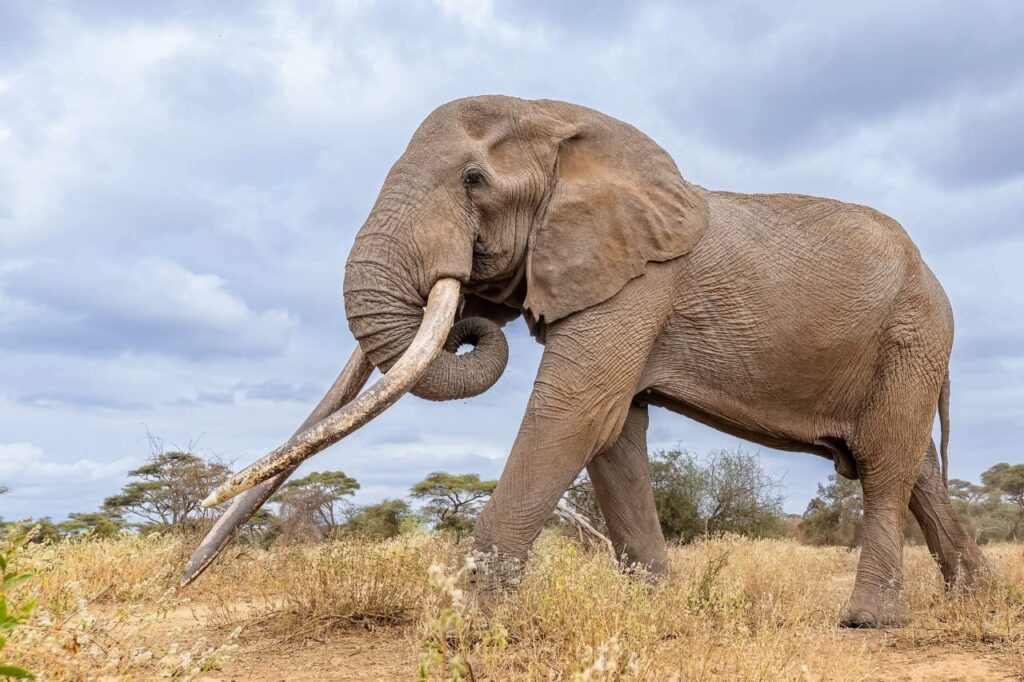
In a communique issued on Tuesday January 13, 2026, KWS stated that the preservation process, known as taxidermy, is already underway, and will enable Kenyans to view the remains of one of Africa’s celebrated elephants.
“The Kenya Wildlife Service (KWS) wishes to inform the public, conservation partners, and the media that the taxidermy preservation process of Craig, the iconic Amboseli National Park super tusker, is currently underway,” the statement read in part.
According to KWS, the process involves the meticulous preservation of Craig’s skin and physical features to create a lifelike mount, that will enable future generations to use it for scientific research and educational purposes.
“In recognition of Craig’s extraordinary ecological, scientific, and cultural significance, KWS has initiated a professional taxidermy preservation process, aimed at carefully conserving his physical form for long-term educational, scientific, and public exhibition purposes,” the service noted.
While inviting the public to honour Craig’s memory and reflect on the importance of safeguarding Kenya’s wildlife and natural heritage, KWS asserted that taxidermy mount will be housed at a designated facility for public viewing, education, and conservation awareness.
“Craig’s life exemplified the success of collective conservation efforts. Through taxidermy preservation, we are ensuring that his legacy endures beyond his lifetime, offering future generations a tangible connection to Kenya’s rich wildlife heritage,” said Prof. Erustus Kanga, Director General, KWS.
Craig, renowned worldwide for his majestic tusks and gentle demeanour, was born in January 1972 to the great matriarch Cassandra of the CB family. He was one of the last remaining super tuskers in Africa, a rare class of elephants whose tusks weigh over 45 kilograms each.
This unique future earned him the status of a ‘living symbol of Africa’s natural heritage and a powerful testament to decades of successful wildlife conservation.’
During his life, Craig fathered numerous calves, ensuring the continuation of his genetic lineage and an increase to elephant population across Amboseli and beyond.
Craig passed away on January 3, 2026, at the age of 54. He died of natural causes linked to his advanced age.
