

The Ebola outbreak in the Democratic Republic of Congo has become the fastest-growing Ebola epidemic ever recorded, according to African health authorities, raising fresh concerns over the country’s ability to contain the disease as infections and deaths continue to rise.
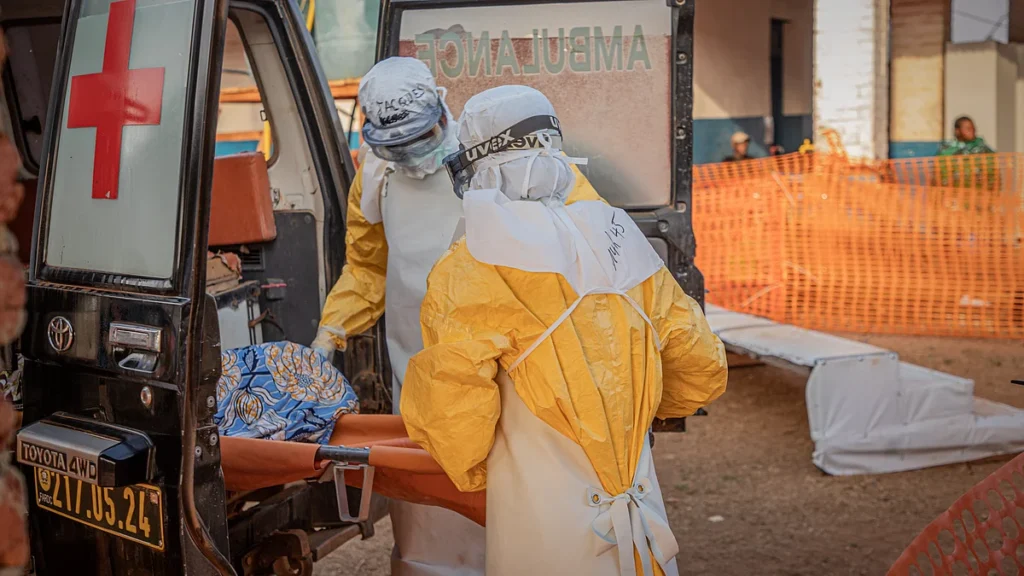
Figures released by the World Health Organization (WHO) show that since the outbreak was declared in mid-May, the country has confirmed 1,759 infections and 600 deaths, while 285 patients have recovered.
Health officials are also investigating 304 suspected cases. Speaking on Thursday, Africa Centres for Disease Control and Prevention (Africa CDC) head of emergency preparedness and response Wessam Mankoula warned that the outbreak is spreading at an alarming pace.
“This is the fastest growing Ebola outbreak ever, not only among the previous Bundibugyo outbreaks, but all the different viruses that are causing Ebola,” he said.
Mankoula noted that the current epidemic had already recorded far more infections within its first six weeks than the 2013-2016 West Africa outbreak, which remains the deadliest Ebola epidemic in history.
He also warned that the number of confirmed cases is doubling roughly every 28 days. “Unfortunately the virus is still ahead of our response. It’s moving faster than deploying the resources to control the situation,” he said.
Health agencies estimate that about $1.4 billion will be required to support disease control measures and humanitarian assistance.
Mankoula appealed to international partners to urgently release funding needed to strengthen medical services and emergency operations.
“We need to surge our response, and surging our response means financial resources, human resources,” Wessam said. “We are urging all partners, donors… to fast-track the disbursement of those resources,” he added.
The outbreak is being driven by the rare Bundibugyo strain of the Ebola virus, which currently has no approved vaccine or specific treatment.
The virus spreads through direct contact with infected bodily fluids, and health experts believe it circulated for some time before being detected.
The epidemic has affected four provinces, with Ituri Province recording the highest number of cases.
Medical researchers have also launched clinical trials to evaluate two possible treatments, including the monoclonal antibody MBP134 and the antiviral drug remdesivir, either separately or in combination.
WHO Representative to the Democratic Republic of Congo Anne Ancia said insecurity, population displacement and a fragile healthcare system continue to hamper efforts to bring the outbreak under control.
“Population movements, persistent insecurity, and the fragility of the health system continue to complicate efforts to bring the outbreak under control,” she said.
Health authorities have expanded laboratory testing and treatment capacity, with more than 10,000 contacts currently under monitoring.
However, officials say the follow-up rate remains below the level required to effectively interrupt transmission.
The crisis has been further complicated by ongoing fighting in parts of eastern Congo, particularly in South Kivu Province, where clashes involving the Rwanda-backed M23 armed group continue to displace civilians.
The United Nations has warned that continued violence could worsen the humanitarian situation and make disease control even more difficult.
As health workers race to contain the virus, officials say increased international support and improved security will be essential to slowing the outbreak and preventing further loss of life.
