

The Kenya Conference of Catholic Bishops (KCCB) has questioned the government’s plan to establish an Ebola quarantine and treatment facility at Laikipia Air Base, calling for greater transparency, public participation and accountability before the project moves forward.
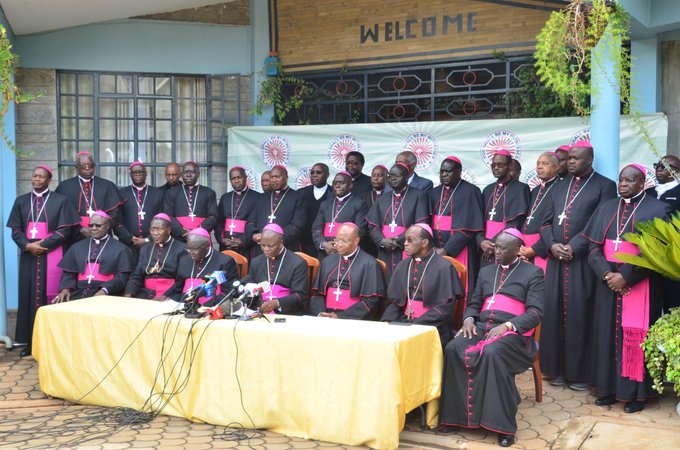
In a statement released on Tuesday, the bishops expressed concern over what they described as a lack of public consultation and parliamentary scrutiny surrounding the proposed facility, which they said is intended mainly for American citizens.
The church leaders argued that decisions with far-reaching public health implications should not be made without involving Kenyans.
“We express our grave concern regarding the proposed establishment of an Ebola quarantine and treatment facility at Laikipia Air Base, mainly for American citizens,” stated KCCB Chairman Most Reverend Maurice Muhatia Makumba in a joint statement issued on Tuesday.
The bishops warned that bringing Ebola patients into the country could expose Kenyans to unnecessary risks, urging the government to prioritize the safety of its citizens.
“Clearly there is an inherent threat to life of Kenyan citizens that must be addressed because we would be importing a deadly disease,” Rev. Muhatia stated.
The church leadership also questioned the value of the arrangement for Kenya, asking why the country should host patients who, they noted, are not being treated in their own nations due to concerns over infection.
“What is in this for Kenya? Is this facility in the interest of our nation, whereby Kenya as a country welcomes the treatment of foreign Ebola patients, who are not welcome in their own country for fear and danger of infection, yet accommodated in our country at the risk of our people?” the KCCB Chair posed.
According to the bishops, a project of such magnitude should have been preceded by wide-ranging consultations involving citizens and stakeholders to build trust and consensus.
“Government wisdom would have required a public engagement to build consensus on the necessity, if at all, of the facility,” said Rev. Muhatia.
The church leaders further linked the absence of public engagement to growing unrest in Laikipia, saying demonstrations against the proposed centre had already resulted in casualties, arrests and anxiety among residents.
“Lack of this engagement has led to loss of lives in Laikipia during the protests against the facility, arrest of residents, and panic should Ebola break out in the area,” they stated.
They urged the government to open discussions with religious organisations, civil society groups, healthcare professionals and local communities to explore other approaches that would strengthen Kenya’s own disease preparedness and response systems.
“The government should engage in genuine, transparent dialogue with religious leaders, civil society, healthcare workers and affected communities to explore alternative solutions that strengthen Kenya’s own health infrastructure and capacity to respond to Ebola and infectious disease threats,” added Rev. Muhatia.
Beyond the proposed facility, the bishops renewed calls for openness in government agreements, saying Kenyans deserve full disclosure of deals that have a direct impact on the country’s resources and welfare.
“We demand transparency in government deals that affect our country, including those recently struck like the exploitation of our minerals. This is a right of all Kenyans because these natural resources belong to the Kenyan people,” the statement said.
While maintaining their reservations, the bishops reiterated their willingness to work alongside the government and international partners to improve Kenya’s healthcare system.
They stressed that any collaboration must safeguard public health, respect constitutional principles and place the interests of Kenyan citizens first.
The church also noted that concerns surrounding the implementation of the Social Health Authority (SHA) remain unresolved and called on the government to continue addressing them as part of broader health sector reforms.
