

Uganda’s Chief of Defence Forces, General Muhoozi Kainerugaba, has claimed responsibility for the deportation of Kenyan Senior Counsel and People’s Liberation Party (PLP) leader Martha Karua, saying he personally ordered her removal and permanent ban from entering the country, a move that has intensified debate over human rights and freedom of movement within the East African Community.
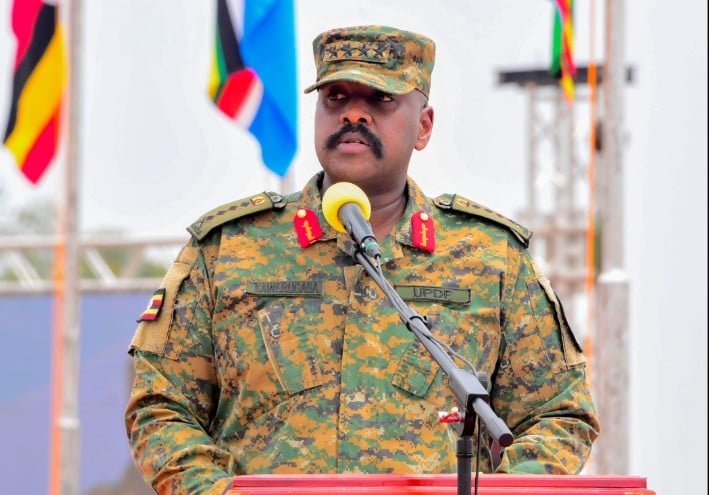
In a post on X, Muhoozi, who is also the son of President Yoweri Museveni, dismissed suggestions that the Ugandan Head of State was behind the decision and instead took full responsibility for the action.
“Do not blame my great father for this decision. I deported her myself. She’s no longer allowed in our country,” Muhoozi wrote.
Karua’s visit to Uganda had been expected to last only a day as she joined a legal team representing detained opposition leader Dr. Kizza Besigye and advocate Erias Lukwago during a scheduled bail hearing.
However, shortly after landing at Entebbe International Airport, immigration officials stopped her and informed her that she would not be allowed into the country.
Recounting the incident, Karua said security officers confiscated her phones before explaining that her entry had been denied.
“I asked them why they were snatching my phone because they were snatching them rudely, I was told I wasn’t being allowed entry due to security reasons,” she said.
The PLP leader later revealed that the restriction extended beyond the day’s travel, saying she discovered while flying back to Nairobi that she had been barred indefinitely from entering Uganda.
“I had been told there was a possibility of a red alert on my name for travel to Uganda,” she added.
The deportation has attracted criticism from legal bodies and democracy advocates across the region, who argue that the incident raises concerns about respect for the rule of law and the principles governing the East African Community.
Reflecting on the latest development, Karua linked it to a previous experience in Tanzania, saying regional governments were increasingly restricting access for lawyers and observers.
“What I have realized now is that East Africa has shrunk…this is my second deportation. I was barred entry into Tanzania for daring to go and witness the trial of Tundu Lissu, yet their constitution says criminal trial is a public thing which anybody can go to,” Karua noted.
East Africa Law Society President Ramadhan Abubakar described the incident as part of a growing pattern affecting legal practitioners in the region.
“There is a trend emerging in the region, this is not the first time a Kenyan lawyer is being denied entry, last year Martha, CS Mutunga were denied entry into Tanzania for Tundu Lissu,” he said.
Karua also expressed concern over the implications of the decision on the ongoing case involving Dr. Besigye, arguing that denying access to members of the defence team undermines the accused’s constitutional rights.
“When they deny entry for Besigye’s lead lawyer and incarcerate his other counsel, that is a denial of Besigye’s right to a fair trial, and as I wondered last week under those circumstances, Besigye cannot get a fair trial in the courts of Uganda,” she said.
The Law Society of Kenya and the Uganda Law Society have both condemned the deportation, while the East Africa Law Society has announced plans to challenge the decision in court and seek an explanation for Karua’s removal and permanent ban.
