

President William Ruto has directed the Energy and Petroleum Regulatory Authority (EPRA) to reduce diesel prices by Ksh10 for the June to July pricing cycle to stabilize pump prices and cushion Kenyans from the effects of the global fuel crisis.
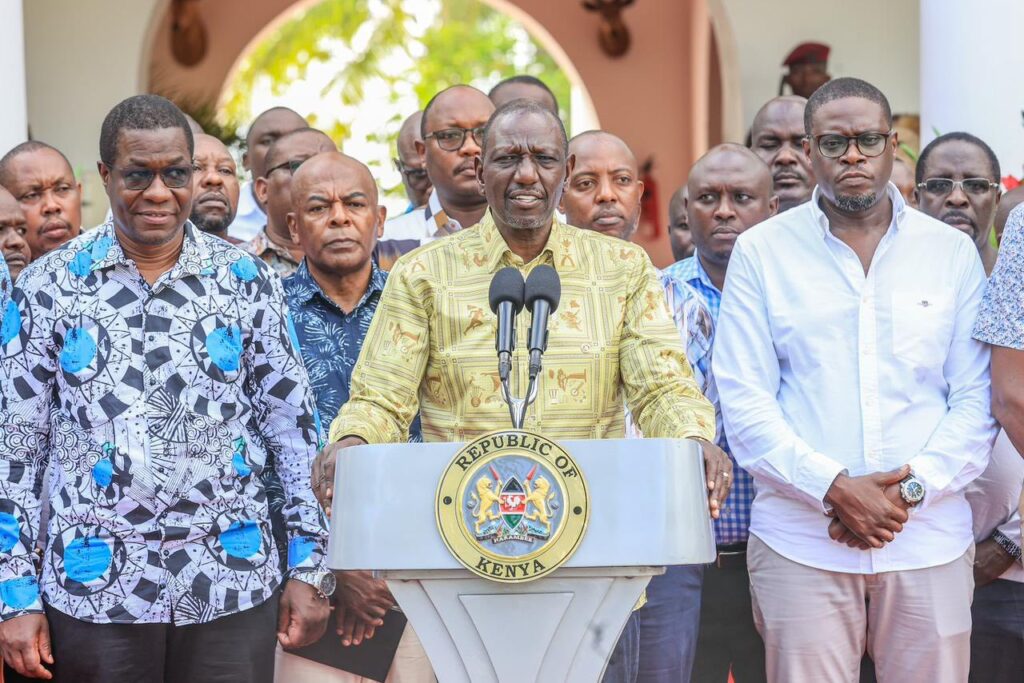
Speaking during a press conference at State House Mombasa on Friday, President Ruto said the decision was reached following consultations with leaders in the transport sector.
“I have directed that in the next pricing cycle, we’re going to further reduce the price of Diesel by a further Ksh.10 for the June/July cycle to help stabilize pump prices and provide additional relief to consumers,” said Ruto.
Once the revised prices take effect on June 15, diesel in Nairobi will retail at KSh222.86 per litre, kerosene at KSh191.38 per litre, and super petrol at KSh214.25 per litre.
During the address, the Head of State attributed the high fuel prices in the country to escalating tensions in the Middle East arising from the ongoing conflict between Iran and the United States, which he said had also disrupted movement through the Strait of Hormuz, a key global oil shipping route.
According to the President, the crisis has caused sharp increases in global fuel prices, with diesel prices rising by 118 per cent internationally.
Ruto stated that the government has rolled out fuel stabilization measures to ease the burden on consumers. He said the State spent KSh28.19 billion across the April/May and May/June 2026 pricing cycles through subsidies and tax reliefs to cushion fuel prices.
He further announced that the government has cut VAT on petroleum products from 16% to 8%, sacrificing KSh14.4 billion in revenue to reduce pressure on households and businesses.
The President also defended the government-to-government fuel import arrangement, saying it has ensured stable fuel supply and helped protect the Kenyan shilling from additional pressure during the ongoing crisis.
“Through the government-to-government (G2G) fuel supply framework, we have secured guaranteed fuel supplies despite global supply chain disruptions, ensuring uninterrupted fuel supply availability across the country. The arrangement has stabilized fuel pricing compared to the old sport market system, where prices fluctuated sharply every month,” he said.
“Before the G2G arrangement was introduced in 2023, oil importers faced intense pressure to secure US dollars within short timelines, driving rapid depreciation of the Kenya shilling and threatening fuel supply stability. By easing pressure on foreign exchange demand and ensuring predictable supply terms, the framework has protected the economy during the crisis as the one we have now. Without it, the country’s situation would be much worse.”
President Ruto called on Kenyans to remain calm amid ongoing economic pressures, urging the public to avoid division and misinformation.
The President said that while citizens have a right to express their concerns, they must do so peacefully and responsibly, warning against actions that could lead to loss of life, destruction of property, or disruption of livelihoods.
“I therefore ask all Kenyans to remain calm, patient and united, let is rejct division, fear and misinformation. While every citizen has a right to express their concerns, we must reject all forms that lead to the loss of lives, property and livelihoods,” he said.
