

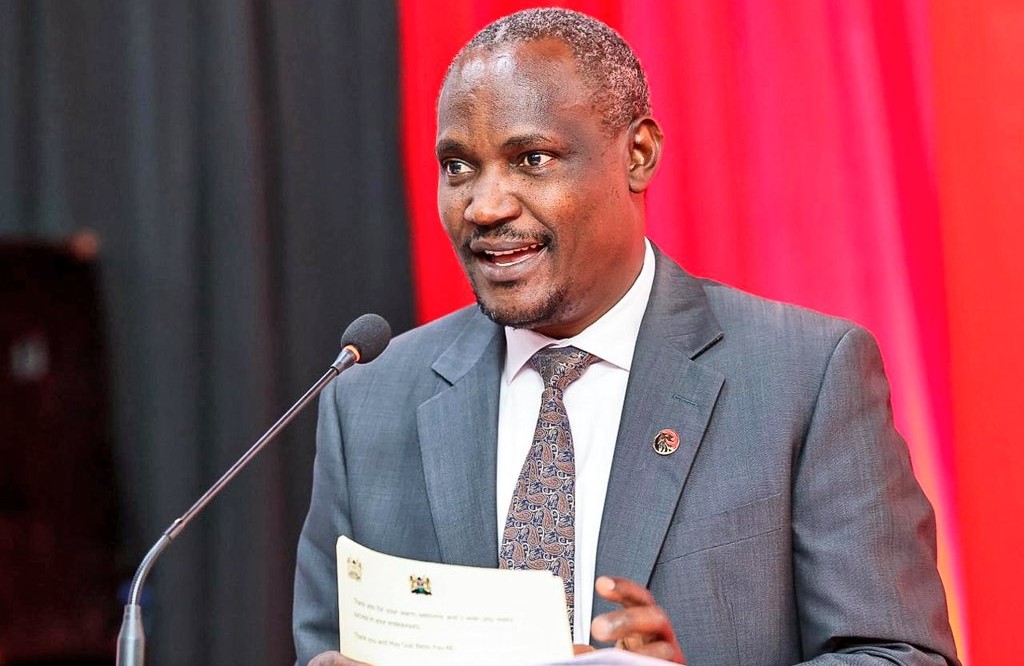
Treasury Cabinet Secretary John Mbadi has defended President William Ruto’s administration, saying concerns raised by residents of the Mt. Kenya region are now largely political rather than economic.
He argued that the government’s interventions in agriculture have addressed many of the issues that previously dominated public debate in the region.
Speaking during a television interview on Wednesday night, Mbadi said the Treasury had prioritised funding for sectors that directly affect livelihoods, particularly agriculture, through allocations contained in the Finance Bill, 2026.
According to him, investments in farming have helped improve production and support key cash crops.
He maintained that the frustrations currently being expressed in the Mt. Kenya region stem from the removal of former Deputy President Rigathi Gachagua from office rather than dissatisfaction with government programmes.
“Today, I don’t hear people from Mlima (Mt. Kenya) complaining about tea, coffee or milk. They are complaining about being betrayed. So how were they betrayed? They say Wamunyoro (Gachagua) has been removed from office. If you have heard them complain about tea, tell me. If you have heard them complain about coffee, tell me,” he said.
Mbadi said the government had directed resources to areas that matter most to ordinary Kenyans, highlighting allocations for agriculture, including Ksh.19.1 billion for the fertiliser subsidy programme, Ksh.2.7 billion for sugar sector reforms, and additional funding to support tea and coffee production.
“We have set our priorities right. We have provided money where it should be, including for agriculture. We have allocated Ksh.19.1 billion for the fertiliser subsidy programme, Ksh.2.7 billion for sugar reforms, and funding to support the tea and coffee sectors, ” he added.
The Cabinet Secretary also contrasted the current administration’s approach with that of former President Uhuru Kenyatta, arguing that agricultural concerns had featured more prominently during the previous government.
He said the coffee industry, although still recovering, had shown signs of improvement under the Kenya Kwanza administration.
Responding to observations that the coffee sector had not fully regained its former strength, Mbadi insisted progress had been made.
“We have revived the coffee sector,” he said before adding, “remember, before President Uhuru left office, what problem did he have with the people from Mlima? They said he had neglected tea, coffee and milk, and they also talked about stalled roads.” He further stated, “Where do you live? Coffee has been revived in this country. It’s a fact. It’s not yet where it used to be, but it will get there. Coffee used to be Kenya’s number one export earner, and we will go back there, unless other sectors overtake it.”
Beyond coffee, Mbadi pointed to ongoing reforms in other agricultural value chains, including edible oils and avocado farming, saying they reflected broader efforts to strengthen the sector.
“We have also started revamping the edible oil sub-sector. Look at what is happening in that space. You just covered a story on avocado. These things don’t just happen.,” he noted.
He also credited the fertiliser subsidy programme with improving food production and stabilising maize supplies across the country.
“For a long period now, we have not had shortages of maize in this country. That didn’t just happen. The fertiliser subsidy programme was not being implemented in the previous administration, but today a lot is happening,” he said.
Mbadi’s remarks come as the government continues to defend its economic agenda and budget priorities amid ongoing political debate over leadership and development.
