

Former Deputy President Rigathi Gachagua has lost his court battle against his removal from office after the High Court dismissed his petition challenging the impeachment process carried out in October 2024.
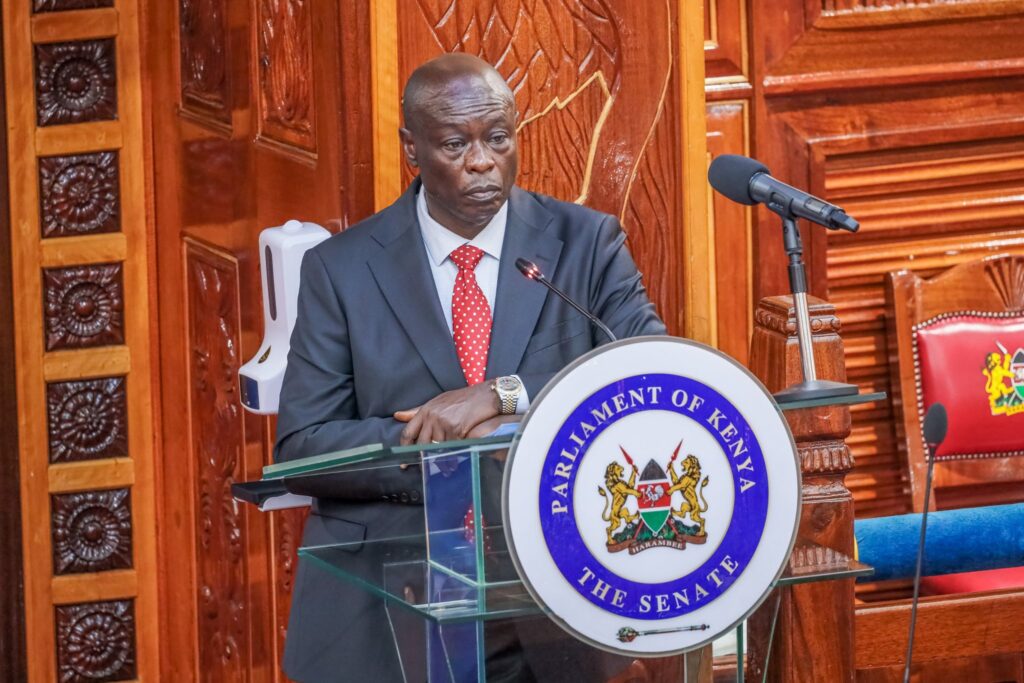
A three-judge bench comprising Justices Eric Ogolla, Anthony Mrima and Frida Mugambi delivered the ruling on Monday, rejecting the core arguments presented by Gachagua and affirming the legality of the parliamentary process that led to his ouster.
Before delving into the substance of the case, the court first confirmed that it had authority to hear the matter, clearing the way for a full determination of the issues raised.
Claims that the Speaker of the National Assembly acted with bias were dismissed, with the judges finding that the former Deputy President did not provide evidence strong enough to support the allegations.
The court also found that the impeachment process met constitutional requirements for public participation.
According to the ruling, Parliament had sufficiently informed the public through notices published in both English and Kiswahili newspapers, allowing citizens a chance to contribute their views.
“We are satisfied that the public participation conducted during the impeachment process met the constitutional threshold,” the bench held.
On the approval of Professor Kithure Kindiki as Deputy President, the judges noted that the proceedings were open and broadcast, and concluded that additional public participation was not constitutionally necessary at that stage.
The bench further upheld Parliament’s Standing Order No. 64, stating that the dispute was not about the seven-day period itself but about how parliamentary business is conducted.
The court found the timeline constitutional while noting that lawmakers retain the option of revising their procedures if needed.
Attention also turned to a broader constitutional gap identified during the proceedings.
The judges observed that Article 150 of the Constitution does not provide a complete legal framework for removing a Deputy President, leaving important procedural questions to judicial interpretation and creating uncertainty in governance.
While highlighting the gap, the court urged Parliament to move with speed to enact clear legislation to guide future impeachment processes involving a Deputy President.
However, the judges stressed that the absence of such a law did not invalidate the impeachment proceedings against Gachagua, noting that Parliament relied on existing constitutional provisions to uphold due process and protect his rights during the process.
The ruling effectively brings to a close Gachagua’s bid to overturn his removal, marking a significant moment in his political journey.
