

Violence in South Sudan has intensified in recent months, triggering a sharp rise in emergency medical evacuations as humanitarian agencies struggle to cope with growing needs and worsening insecurity across the country.
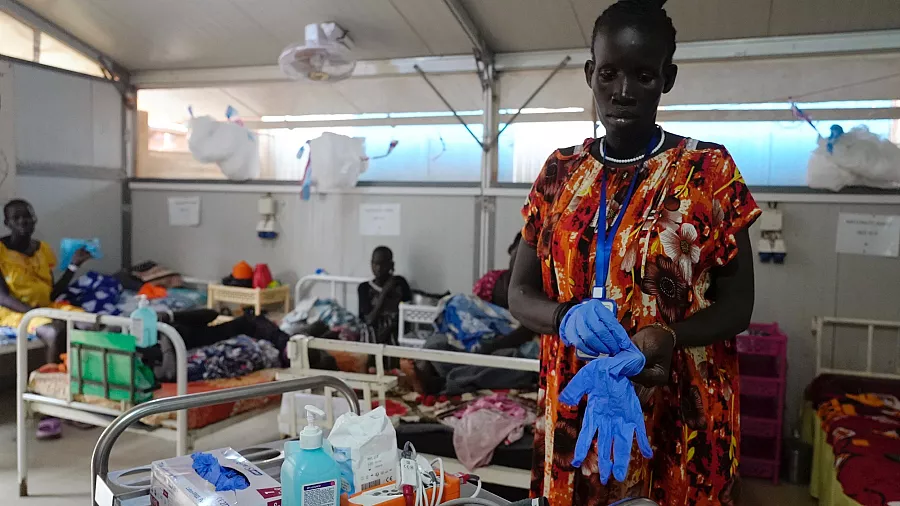
The International Committee of the Red Cross (ICRC) said it evacuated 266 wounded people between January and June this year, marking an increase of more than 50 per cent compared to the same period last year.
Most of the critically injured patients were flown to Juba Military Hospital, where the number of surgical operations has also risen significantly.
Aid agencies say the conflict has overwhelmed health facilities, particularly in remote regions where hospitals have either been destroyed or are no longer functioning.
The growing demand for medical care has also been compounded by funding shortages, making it increasingly difficult to provide lifesaving treatment.
“Conflict is not getting any better, and humanitarian needs are also on the rise,” said Rose Ochieng, ICRC health coordinator in South Sudan.
Ochieng added that widespread funding shortfalls have caused an unprecedented strain on operating hospitals.
Many of those receiving treatment have travelled from isolated communities with little or no access to healthcare.
One of them, Ngor Gatluak, was flown from Agany in Jonglei State after sustaining gunshot injuries during fighting.
“There is no hospital in our area,” said Ngor Gatluak. “So I was taken from Agany for treatment and later referred here. I am feeling much better now and hope to return home soon,” he added.
The humanitarian situation has deteriorated further following attacks on health facilities.
Airstrikes in Jonglei State forced Médecins Sans Frontières (MSF) to permanently shut down one of its hospitals and suspend essential medical services, leaving thousands of residents without critical healthcare.
“While we are aware of the enormous needs in the country, we find it unacceptable to be a target for attacks,” said Gul Badshah, MSF operations manager.
The United Nations Mission in South Sudan (UNMISS) has also raised concern over the worsening security situation, reporting a significant increase in civilian casualties during a recent reporting period.
The mission warned that continued violence is placing more lives at risk and further disrupting humanitarian operations.
“Every statistic in the report represents the impact of continued violence on human lives,” said Anita Kiki Gbeho, Head of UNMISS, as she appealed to all parties involved in the conflict to protect civilians and allow humanitarian workers safe access to affected communities.
As fighting continues across parts of South Sudan, humanitarian organisations warn that the country’s fragile health system is being pushed beyond its limits.
They are urging greater protection for medical facilities, increased humanitarian support and an end to attacks that continue to deny vulnerable communities access to lifesaving care.
