

Nairobi County has taken a major step towards transforming its public transport system after the County Executive Committee (CEC), chaired by Governor Sakaja Johnson, approved the implementation framework for Phase I of the Nairobi Metropolitan Mass Rapid Transit System (NMRTS).
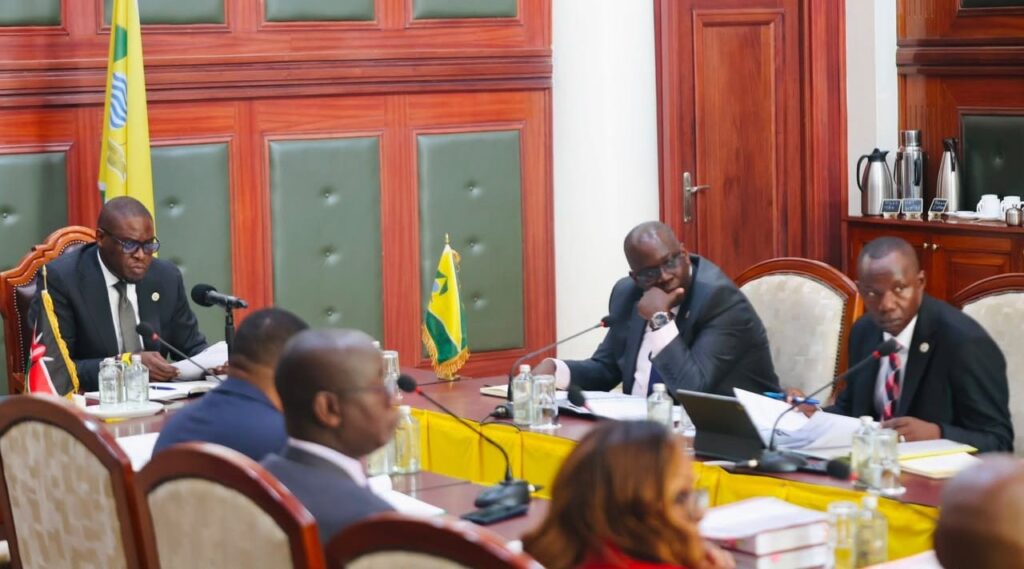
The approval was made during the 90th County Executive Committee meeting, paving the way for the first phase of the ambitious mass transit project developed through close technical collaboration between Nairobi City County and the Executive Office of the President.
Phase I will focus on two key mobility corridors; an underground rail core running through the Central Business District (CBD) and the Eastlands Line, targeting some of the city’s busiest commuter routes.
Governor Sakaja said the approval marks a turning point in Nairobi’s efforts to address persistent traffic congestion and modernise public transport.
“For far too long, the people of Nairobi, particularly our hardworking commuters from Eastlands and across the metropolitan area, have lost precious hours in traffic jams that slow down our economic growth,” he said.
“Today, we are moving from planning to implementation. The approval of Phase I of the NMRTS is our commitment to delivering a modern, fast, safe and dignified public transport system. By integrating an underground CBD core with high-capacity links to Eastlands, we will unlock Nairobi’s economic potential, lower the cost of transport and build a cleaner, greener and world-class city.”
According to the approved framework, the project will prioritise improved connectivity between Eastlands and the CBD, reducing travel times for hundreds of thousands of commuters who rely on the routes daily.
The underground CBD section is expected to ease congestion on surface roads by introducing integrated transit terminals that will connect rail services, pedestrians and non-motorised transport systems.
The county government said the project will also generate thousands of employment opportunities during construction and operation, while helping reduce carbon emissions and supporting Nairobi’s sustainability and climate objectives.
The proposal was presented by Dr Silvester Kasuku, Governance Advisor in the Executive Office of the President, highlighting the partnership between the National Government and Nairobi City County in implementing the flagship infrastructure project.
Governor Sakaja further announced that preparations for Phase II of the NMRTS are already underway. The next phase will extend the network to Westlands, Ngong Road and Lang’ata, while serving growing commuter populations from Ongata Rongai, Ngong and Nairobi’s western corridor.
Once completed, the NMRTS will be integrated with Nairobi’s Bus Rapid Transit (BRT) system through strategically located interchange stations, creating a seamless, high-capacity transport network across the city.
The county government will now embark on public participation forums, stakeholder consultations with transport sector players and inter-agency planning as preparations continue towards the project’s official groundbreaking.
