

The construction of the Rironi-Mau Summit Road Project is making steady progress, marking a significant milestone in the Government’s ongoing efforts to modernize the Northern Corridor and enhance transport efficiency across Kenya.
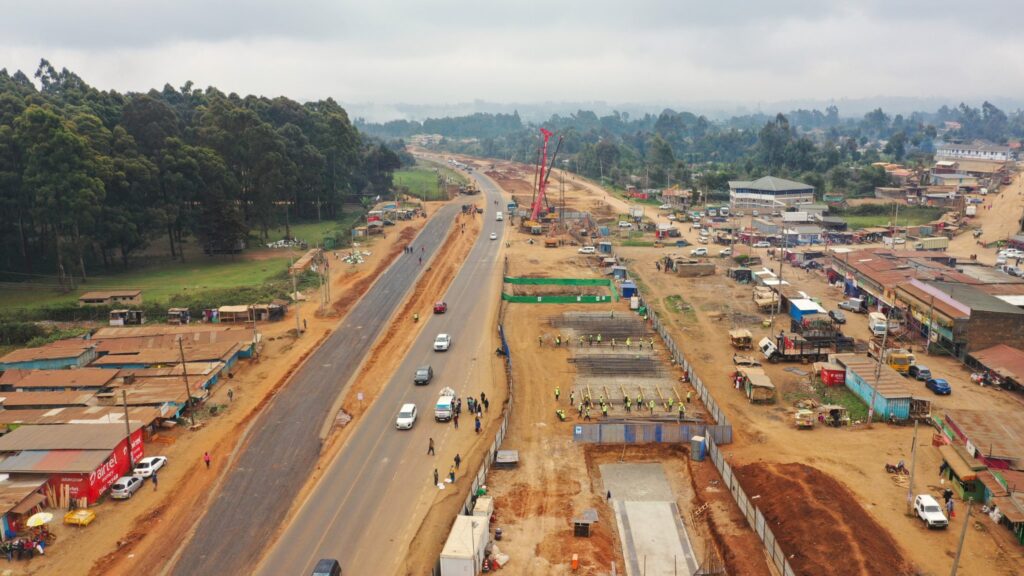
To fast-track implementation, Kenya National Highways Authority (KeNHA), in a statement issued on Thursday, said the project has been divided into three sections: the 81-kilometre Rironi-Naivasha-Gilgil section, the 58-kilometre Rironi-Maai Mahiu-Naivasha (A8 South) section, and the 94-kilometre Gilgil-Nakuru-Mau Summit section.
The authority noted that the phased approach is expected to improve project delivery while ensuring efficient construction across the corridor.
Implemented through a Public-Private Partnership (PPP) model, the project combines public and private sector investment and expertise to deliver a modern, high-capacity highway.
According to KeNHA, the upgraded road is designed to ease traffic congestion, improve road safety, and enhance travel efficiency along one of the country’s busiest transport corridors.
Once completed, the expanded highway is expected to significantly reduce travel times and vehicle operating costs while facilitating the efficient movement of passengers and freight between the Port of Mombasa and Kenya’s hinterland.
The improved corridor will also strengthen regional connectivity, supporting trade within Kenya and across the wider East African region.
“Upon completion, the upgraded corridor will reduce travel time and vehicle operating costs while facilitating the efficient movement of passengers and freight between the Port of Mombasa and the hinterland,” KeNHA said.
Beyond improving transport infrastructure, the project is anticipated to stimulate economic growth by attracting investment, creating employment opportunities during and after construction, and supporting Kenya’s long-term socio-economic development agenda.
The Rironi-Mau Summit Road Project is a key component of the government’s broader infrastructure development strategy, aimed at enhancing mobility, improving logistics, and reinforcing Kenya’s position as a regional trade and transport hub.
