

Public learning institutions across the country are continuing to face financial strain as delays in the release of government funding and capitation disrupt operations, with the Ministry of Education blaming inadequate budget allocations and delayed Exchequer releases from the National Treasury.
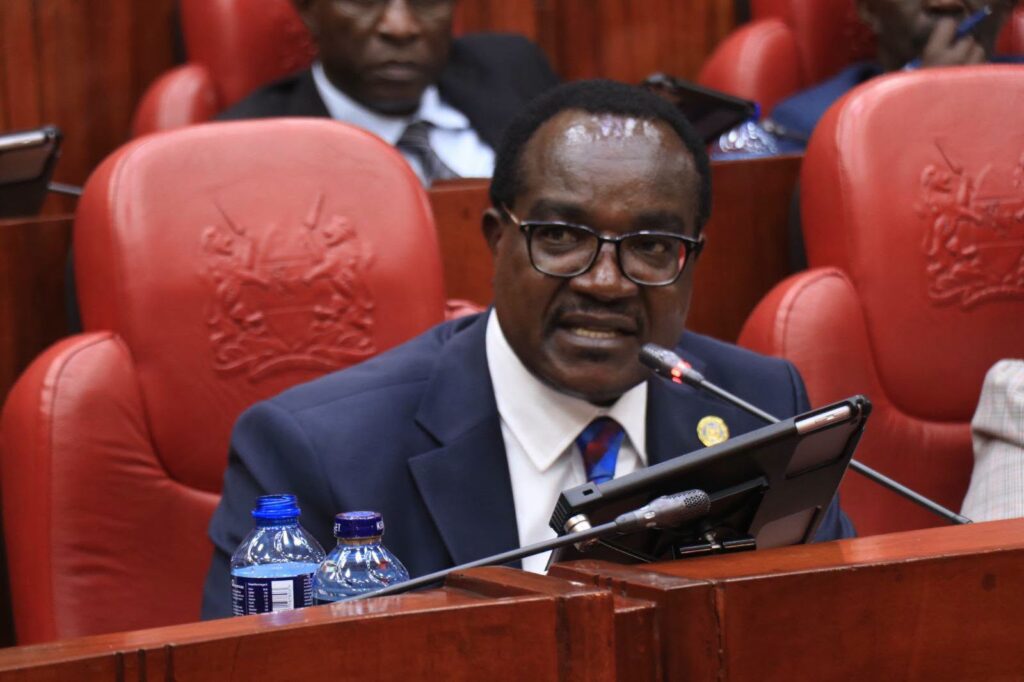
Education Cabinet Secretary Migos Ogamba told the National Assembly Public Investments Committee on Governance and Education that the ministry has not deliberately withheld funds.
Instead, he said the education sector is struggling with a growing financing gap after receiving far less than it requires to support schools, TVET institutions and public universities.
“We normally indicate the amount we require, but what we receive is not sufficient. That is what leads to the deficit,” Ogamba told lawmakers.
The Cabinet Secretary disclosed that the funding shortfall has risen to nearly Ksh.29 billion, forcing the ministry to explore additional sources of financing while continuing to seek higher budgetary allocations from the National Treasury and Parliament.
Public universities have been among the hardest hit. The ministry explained that financing for both new and continuing students has fallen well below demand.
During the 2025/2026 financial year, the government required close to Ksh.30 billion to support first-year students under the Student-Centred Funding Model but allocated only Ksh.18.4 billion, leaving a deficit of Ksh.11.5 billion.
Continuing students under the Differentiated Unit Cost Funding Model also face a significant gap after universities received Ksh.23 billion against a requirement of Ksh.40.47 billion.
Overall, the university sector required Ksh.70.39 billion for scholarships and grants but received Ksh.41.42 billion, creating a shortfall of nearly Ksh.29 billion.
“We will therefore continue to engage Parliament, the National Treasury and relevant stakeholders towards the progressive alignment of funding for public universities,” Ogamba said.
Members of Parliament questioned the government’s spending priorities, arguing that delayed funding has shifted the financial burden to parents while institutions struggle to meet their obligations.
Embakasi West MP Mark Mwenje criticised the continued delays
“Every institution appearing before this committee says it has not received its allocation. If this government can find money for gas cylinders and mattresses in Ol Kalou, surely it can find money for these students,” he said .
The committee also raised concerns over financial mismanagement in some institutions, warning that corruption is worsening the challenges facing the education sector.
Luanda MP Dick Maungu said lawmakers had uncovered cases involving misuse of public funds and indicated that recommendations would be made against some university administrators.
“We have a few vice-chancellors against whom this committee will be making recommendations because we have uncovered theft of public resources. Just yesterday, we had a university that could not explain how public funds had been spent,” Maungu said.
Despite the funding challenges, Ogamba said the ministry has made progress in clearing historical obligations.
He noted that Ksh.3.88 billion was released in December 2025 as the first instalment of salary arrears owed under the 2017–2021 Collective Bargaining Agreement, with the remaining balance expected to be settled during the 2026/2027 financial year.
Lawmakers further urged the ministry to crack down on school heads accused of charging parents fees beyond the approved guidelines, saying accountability and adequate funding will both be essential to improving the quality and sustainability of public education.
