

Senior Counsel and People’s Liberation Party (PLP) leader Martha Karua was on Monday denied entry into Uganda and deported back to Kenya, triggering fresh concerns over political freedoms and regional cooperation within the East African Community.
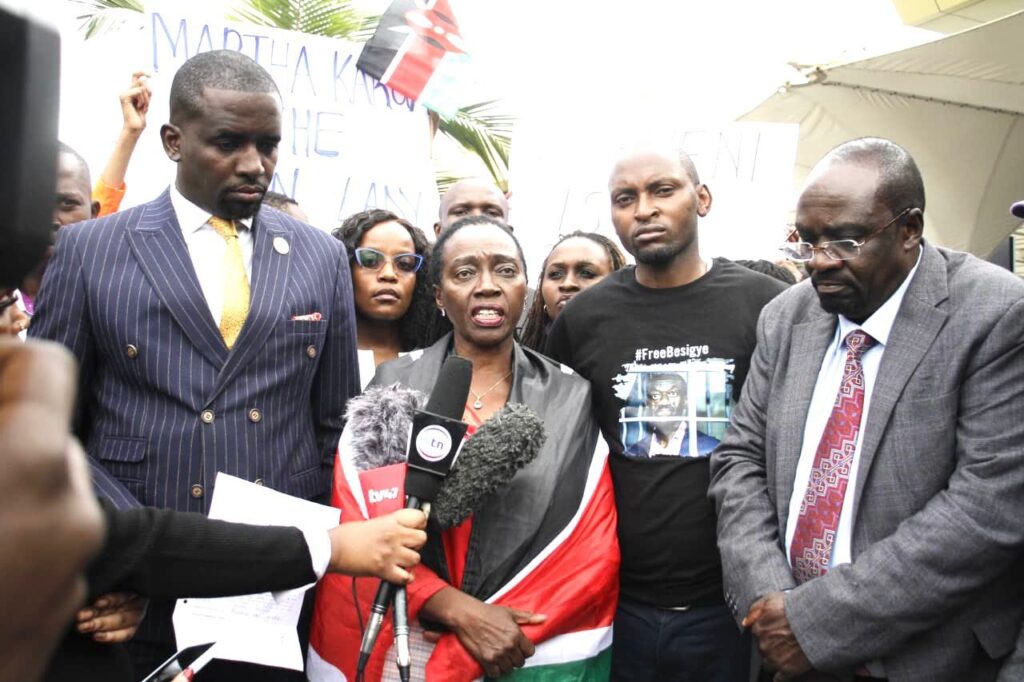
Karua had travelled to Kampala to join the legal team representing veteran Ugandan opposition leader Dr. Kizza Besigye and co-counsel Erias Lukwago, but her visit was cut short after immigration officials at Entebbe International Airport stopped her from entering the country and declared her persona non grata.
Speaking after arriving at Jomo Kenyatta International Airport (JKIA), the former Justice Minister described the incident as unlawful and politically driven, saying she had been unfairly targeted while carrying out her professional duties.
“I am relieved to be back home in Kenya after being denied entry into Uganda on Monday morning under circumstances that I believe were unlawful and politically motivated,” Karua stated.
She explained that although she had initially gone through the normal clearance process, security officers later intercepted her, detained her and confiscated her mobile phones before placing her on a return flight to Nairobi.
Karua maintained that the action was intended to weaken the legal defence of Dr. Besigye, describing the deportation as political persecution and interference with his defence.
The incident drew sharp reactions from legal professionals across the region, especially after other members of the delegation, including Law Society of Kenya President Charles Kanjama, were allowed into Uganda without any restrictions.
Uganda Law Society Deputy President Antony Asiimwe expressed surprise over the decision, noting that no reason was given for Karua’s exclusion.
The Law Society of Kenya also condemned the incident and demanded an explanation from Ugandan authorities, insisting that the rule of law and the rights of legal practitioners should be respected across the region.
Karua further argued that her treatment undermined the principles of the East African Community, saying her right to free movement had been violated.
“We are not viumbe … we are citizens of East Africa”, she said.
By Monday evening, Ugandan authorities had not publicly explained the reasons behind the decision, leaving fresh questions about cross-border political freedoms and the protection of legal representation within the East African Community.
