

Education, energy, infrastructure and healthcare emerged among the biggest beneficiaries as Treasury Cabinet Secretary John Mbadi unveiled the government’s Ksh.4.8 trillion budget for the 2026/27 financial year.
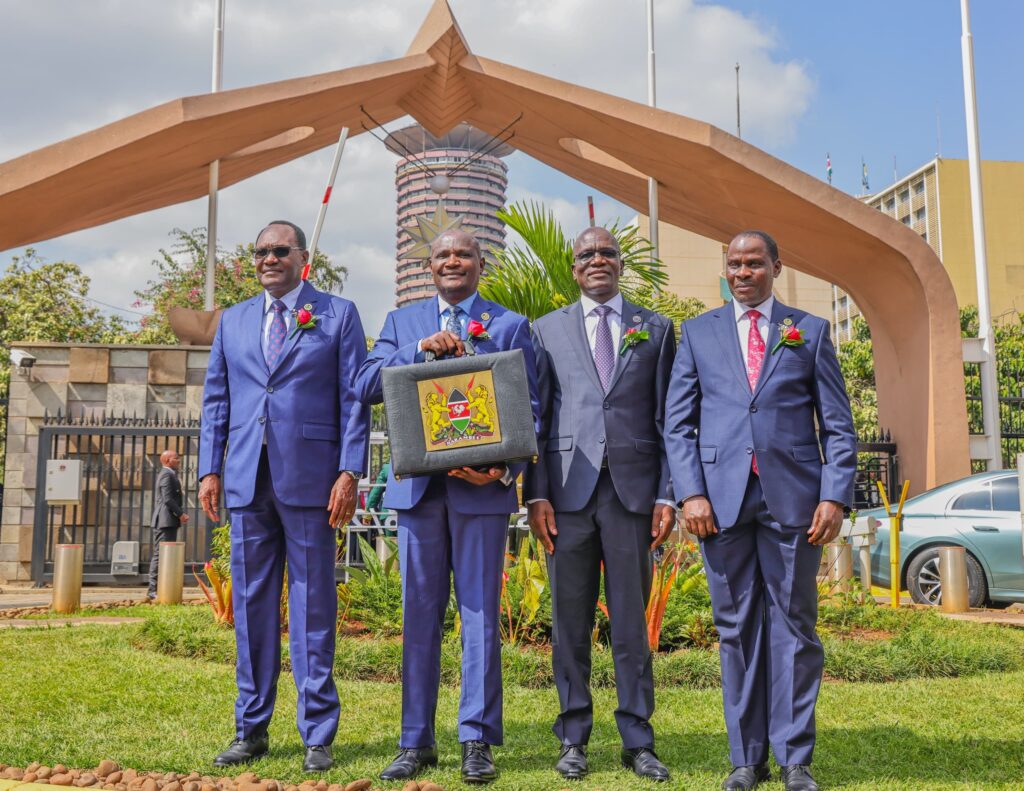
Presenting the Budget Statement in the National Assembly on Thursday, Mbadi said the spending plan is designed to support the implementation of the Bottom-Up Economic Transformation Agenda while sustaining economic growth and improving service delivery.
At the centre of the expenditure framework is the education sector, which received the largest allocation of Ksh.784.5 billion.
The funding includes Ksh.424.3 billion for the Teachers Service Commission (TSC), Ksh.136.6 billion for Basic Education, Ksh.163.9 billion for Higher Education and Ksh.58.5 billion for Technical and Vocational Education and Training (TVET) institutions.
The government also set aside substantial resources for energy and digital infrastructure, with Ksh.531.3 billion earmarked for projects aimed at increasing electricity access, strengthening grid connectivity and supporting renewable energy initiatives.
Public administration and intergovernmental relations were allocated Ksh.373.7 billion to support devolution, improve public service delivery, strengthen government institutions and maintain Kenya’s diplomatic engagements abroad.
Meanwhile, Ksh.363.9 billion was directed to the Governance, Justice, Law and Order sector to support justice administration, legal reforms and institutional development.
Security remains another major spending area, receiving Ksh.316.2 billion.
The allocation will support the operations of the Ministry of Defence, the National Police Service and intelligence agencies, with a focus on modernization and national stability.
Transport infrastructure also secured significant funding, with Ksh.220.4 billion set aside for roads and other transport networks aimed at easing movement, reducing logistics costs and improving access to markets.
The health sector received Ksh.177.2 billion to strengthen healthcare delivery and expand access to affordable medical services across the country.
Among the key allocations are Ksh.19.1 billion for the Primary Healthcare Fund, Ksh.6.4 billion for vaccine programmes and Ksh.45.3 billion for referral hospitals.
Additional health spending includes Ksh.3.1 billion for research at the Kenya Medical Research Institute (KEMRI), Ksh.500 million for family planning and reproductive health commodities, Ksh.9.3 billion for medical interns, Ksh.10.9 billion for Kenya Medical Training Colleges and Ksh.3.2 billion for Community Health Promoters’ stipends.
Environmental conservation, water access and natural resource management were allocated Ksh.121.2 billion.
The funding is expected to support climate adaptation measures, water projects and environmental sustainability initiatives.
Agriculture, alongside rural and urban development programmes, received Ksh.111.7 billion.
The government plans to use the funds to improve crop and livestock production, strengthen disease control measures, enhance breeding programmes and support efforts aimed at reducing the cost of food.
While outlining the budget, Mbadi said the allocations are intended to advance the government’s development agenda and support key sectors that drive economic activity and social welfare.
The spending plan now shifts attention to implementation, where the success of the budget will largely be measured not by the size of the allocations but by how effectively the resources translate into jobs, improved public services and tangible benefits for ordinary Kenyans.
