

President Donald Trump has warned that the United States could impose tolls on ships using the Strait of Hormuz if Iran fails to reach a comprehensive agreement within the next 60 days, linking the proposal to the recently announced ceasefire arrangement between the two countries.
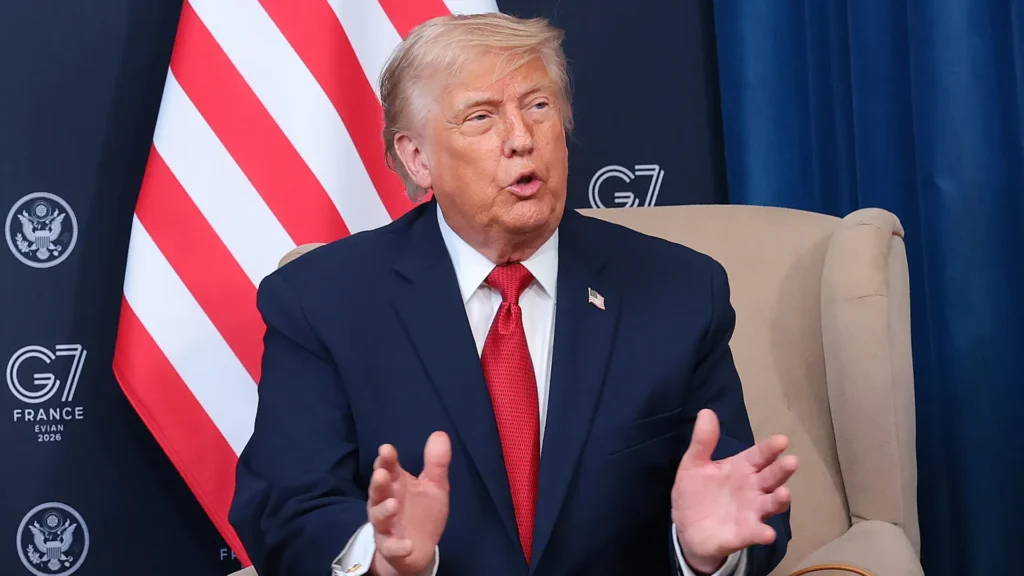
In a social media post on Saturday, June 20, Trump said vessels would continue to use the strategic waterway without additional charges during the ceasefire period, but suggested that the situation could change if negotiations do not produce a lasting deal.
“There will be NO TOLLS in the Hormuz Strait for 60 days during the Cease Fire Period, and there will be NO TOLLS after the 60 day period has expired, unless they are imposed by and for the United States of America,” Trump posted.
The U.S. president further argued that any future fees would help offset the cost of America’s role in safeguarding the region.
He added that any money collected would go toward services rendered as the Guardian Angel to the countries of the Middle East for purposes of both past, present, and future reimbursement of costs.
Trump’s remarks come only days after Washington and Tehran reached a memorandum of understanding that temporarily halted hostilities and paved the way for the reopening of the Strait of Hormuz, one of the world’s busiest energy corridors.
The narrow passage connecting the Persian Gulf and the Gulf of Oman is responsible for transporting roughly one-fifth of global oil supplies, making stability in the area critical to international trade.
As part of the temporary arrangement, Iran agreed to remove mines and other threats that had disrupted commercial shipping during months of conflict and allow vessels to pass freely for 60 days while broader negotiations continue.
The latest discussions are expected to focus on unresolved issues including Iran’s nuclear programme, sanctions relief and wider regional security concerns.
Vice President JD Vance has already departed for Switzerland, where technical talks are expected to begin after his trip was delayed due to logistical challenges and renewed tensions involving Israel and Hezbollah.
The proposed toll policy has sparked debate, with critics arguing that it could create uncertainty for global shipping and energy markets if negotiations fail.
Others have questioned whether the temporary arrangement gives Iran leverage without securing long-term guarantees.
Despite the concerns, the ceasefire has already eased pressure on global markets, with oil prices stabilising as tanker traffic gradually returns to the strategic route.
The Strait of Hormuz has remained a focal point of regional tensions, with U.S. naval forces continuing to patrol the area to protect commercial vessels.
Iranian officials have also raised the possibility of introducing what they describe as service fees for safe passage through the waterway, although no formal framework has been announced.
