

The government has appointed seasoned banker and former Cabinet Secretary Adan Abdulla Mohammed as the new Commissioner General of the Kenya Revenue Authority, marking a new leadership transition at the country’s tax collection agency.
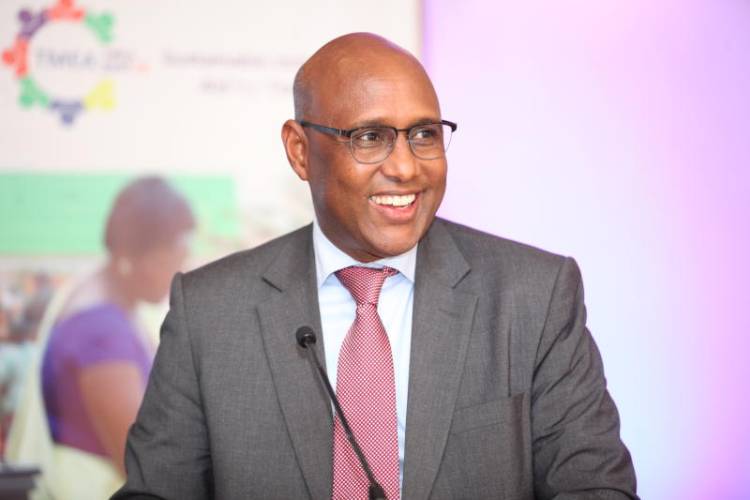
The appointment was announced through a Special Issue of The Kenya Gazette dated May 18, 2026, in which Treasury Cabinet Secretary John Mbadi confirmed Mohammed’s selection under Section 11(1) of the Kenya Revenue Authority Act.
“Mohammed will serve a three-year term effective immediately, taking over from outgoing Commissioner General Humphrey Wattanga,” the statement read.
His appointment places one of Kenya’s most experienced corporate and public sector administrators at the helm of the revenue agency at a time when the government is under pressure to increase domestic revenue collection and reduce reliance on borrowing.
Before joining public service, Mohammed served as Chief Executive Officer of Barclays Bank Kenya, where he oversaw one of the country’s largest financial institutions during a period of significant expansion in the banking sector.
He later rose to become Managing Director for Barclays East and West Africa, a role that saw him coordinate banking operations across multiple African markets.
He also served as Chief Administrative Officer for Barclays Africa, supervising operations in ten countries, a position that exposed him to regional economic management, corporate governance and institutional restructuring.
He previously served as Cabinet Secretary for Industrialization and Trade, where he was involved in policies aimed at boosting manufacturing, trade competitiveness and investment.
He later headed the East African Community and Regional Development docket, helping coordinate Kenya’s regional integration agenda and cross-border economic partnerships within the East African region.
Most recently, Mohammed has been serving as Chief of Strategy Execution at State House under the administration of President William Ruto, a role that placed him at the centre of implementing key government priorities and development programmes.
His appointment to KRA comes at a critical time for the tax authority as the government seeks to strengthen revenue performance amid rising public expenditure demands and growing pressure to fund development projects locally.
KRA has in recent years intensified efforts to seal tax leakages, digitize tax systems and bring more businesses and individuals into the tax bracket.
However, the agency has also faced criticism from sections of the business community over what some describe as aggressive tax enforcement measures.
Mohammed is expected to take charge immediately and oversee the agency’s strategic direction for the next three years, including efforts to improve revenue mobilisation, restore public confidence and support the country’s broader economic agenda.
