

Former Deputy President Rigathi Gachagua has appeared in court to challenge his impeachment, saying the process that removed him from office was unlawful.
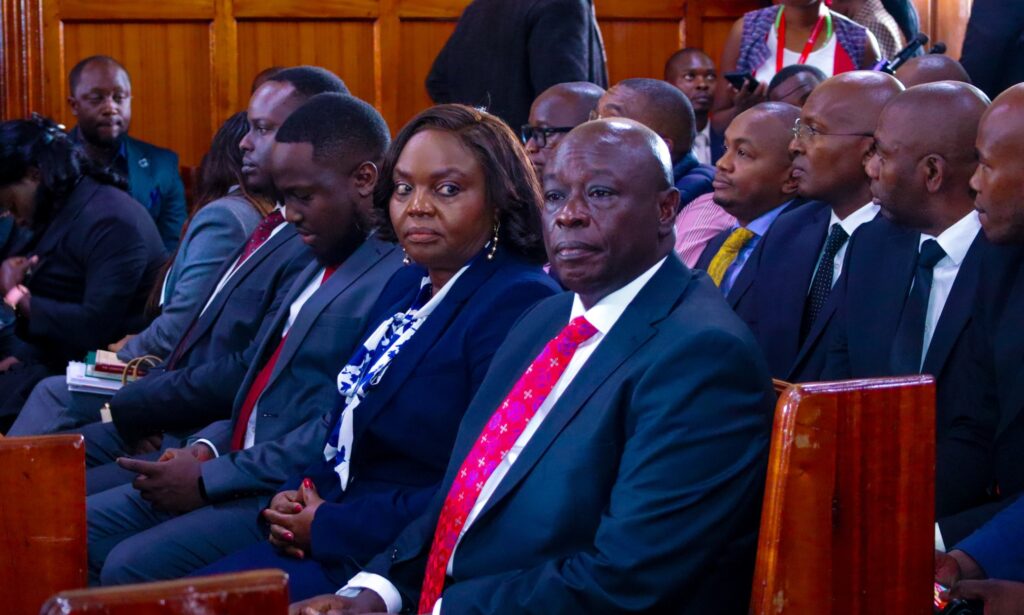
Gachagua presented himself at the Milimani Law Courts on Monday April 27, 2026, accompanied by his wife Dorcas Rigathi, their two sons and his legal team.
The case is set to be heard by a three-judge bench comprising Justices Erick Ogolla, Anthony Mrima and Freda Mugambi.
The former deputy president is contesting the legality and constitutionality of his removal, arguing that the process was flawed and did not follow due procedure.
He claims there were violations of constitutional safeguards and that he was denied a fair hearing.
Through his lawyers, Gachagua maintains that some of the actions taken against him, both during and after his time in office, were politically driven and lacked a proper legal basis.
The court is expected to give directions on several pending applications, including requests for conservatory orders and responses filed by state agencies.
The matter is also likely to address broader constitutional issues such as the powers of Parliament, the role of the Senate, and the legal threshold required to impeach a Deputy President.
Speaking earlier in Mombasa, Gachagua expressed confidence in the case, saying he had strong evidence to support his claims.
“I will be in court from tomorrow to Wednesday to file a petition challenging that illegal process. I told my children about it and they opposed it saying I will face humiliation,” he said.
The case stems from multiple petitions filed by Gachagua challenging decisions made during and after his tenure. Several parties have since joined the case with different applications and submissions.
In a related development, the Court of Appeal on May 9, 2025, quashed an earlier decision by Deputy Chief Justice Philomena Mwilu that had constituted a three-judge bench to hear a similar petition on his removal.
The outcome of the case is expected to set a significant legal precedent on the impeachment of a Deputy President and the extent of judicial oversight over parliamentary processes.
