

The Kenya Meteorological Department has issued a fresh warning over heavy rainfall expected in several parts of the country this week, raising concerns about possible flooding and a spike in disease outbreaks.
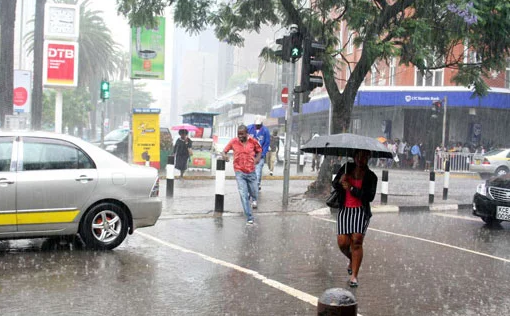
According to its latest meteorological Weekly Bulletin, a number of counties in the Highlands East of the Rift Valley including Nairobi, Murang’a, Nyeri, Embu, Kirinyaga, Meru, and Tharaka Nithi are likely to receive cumulative rainfall exceeding 50mm.
Such levels, the agency cautions, could easily trigger flooding, especially in vulnerable areas.
“Few places in Counties such as Nairobi, Murang’a, Nyeri, Embu, Kirinyaga, Meru and Tharaka Nithi in the Highlands East of Rift Valley are expected to receive cumulative rainfall of 50mm during the forecast period,” highlighted Kenya Met.
The warning extends to western and southern regions, where counties such as Kisii, Bomet, Migori, Homabay, Kericho, Narok, Vihiga, Busia, and Kakamega are also expected to experience similar downpours.
Authorities say low-lying and flood-prone areas in these regions face a real risk of flooding.
In northern Kenya, Moyale in Marsabit County has been singled out as a high-concern zone. The bulletin indicates that the area could record rainfall above 50mm, with a moderate flood risk already identified through April 13.
This comes after prolonged dry conditions that have affected the region in recent months.
Meanwhile, Kitui and Taita Taveta counties are forecast to receive above-normal rainfall, with some areas likely to record higher-than-usual amounts accompanied by scattered showers.
Beyond flooding, health experts are raising alarm over the potential impact of stagnant water. The bulletin warns that the current weather conditions could significantly increase the risk of mosquito-borne diseases such as malaria, dengue fever, Rift Valley Fever, and chikungunya.
“There is an Increased risk of mosquito-borne diseases ,Malaria, Dengue, Rift Valley Fever, Chikungunya and Waterborne diseases Cholera, Diarrhoea, Typhoid due to rainfall and stagnant waters,” stressed Kenya Met.
Waterborne diseases are also a growing concern, particularly in areas where floodwaters may contaminate drinking water sources.
Officials emphasize the importance of access to clean and safe water to prevent outbreaks of cholera, diarrhoea, and typhoid.
Adding to the situation, parts of Nyandarua, Nyeri, and Meru counties are expected to experience unusually low temperatures, dropping to 10 degrees Celsius or below conditions that may further affect vulnerable populations.
Residents in affected areas are being urged to remain vigilant, avoid flooded zones, and take necessary precautions to safeguard their health as the rains intensify.
